Autocomplete from your data, in every pipeline stage
Monghoul suggests field names, types and the values your documents hold, from the collections you are connected to. In an aggregation, each stage is offered the fields the stages before it produce, joined fields included.
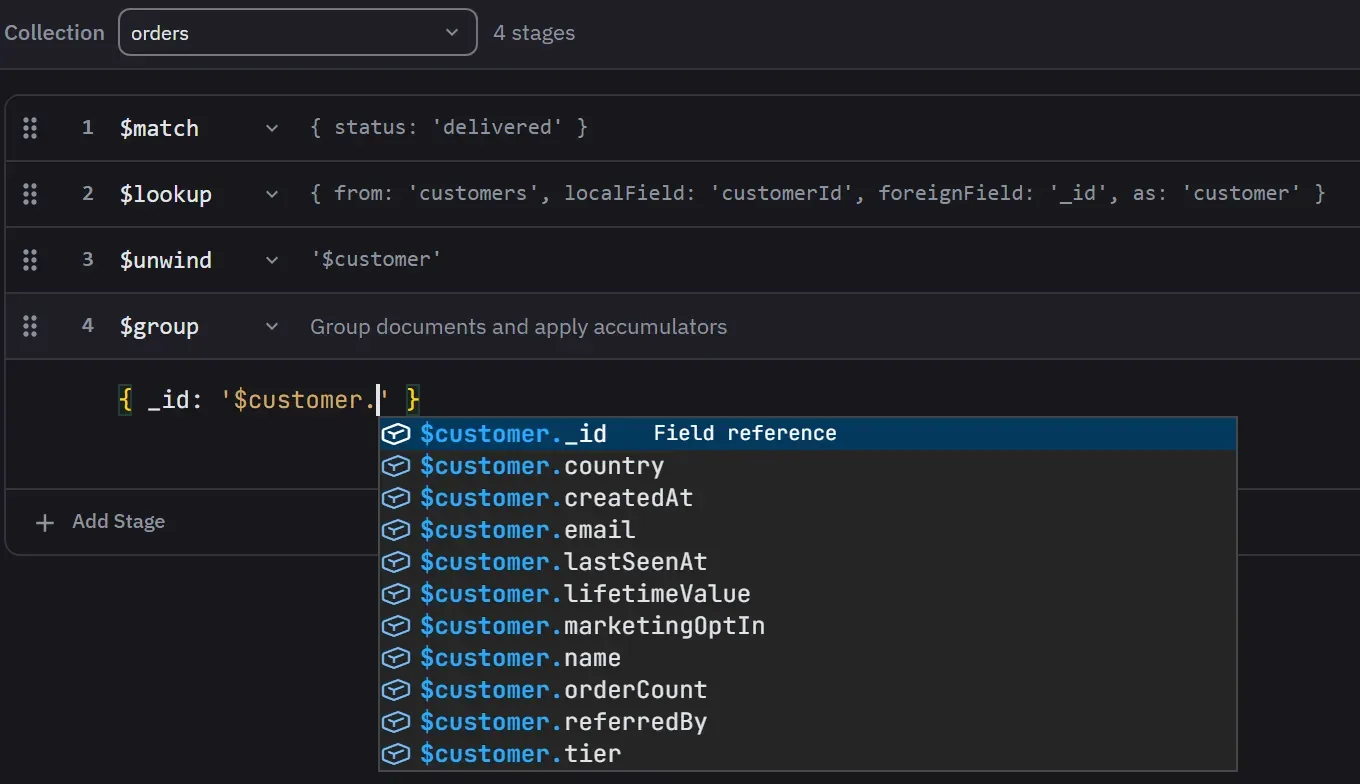
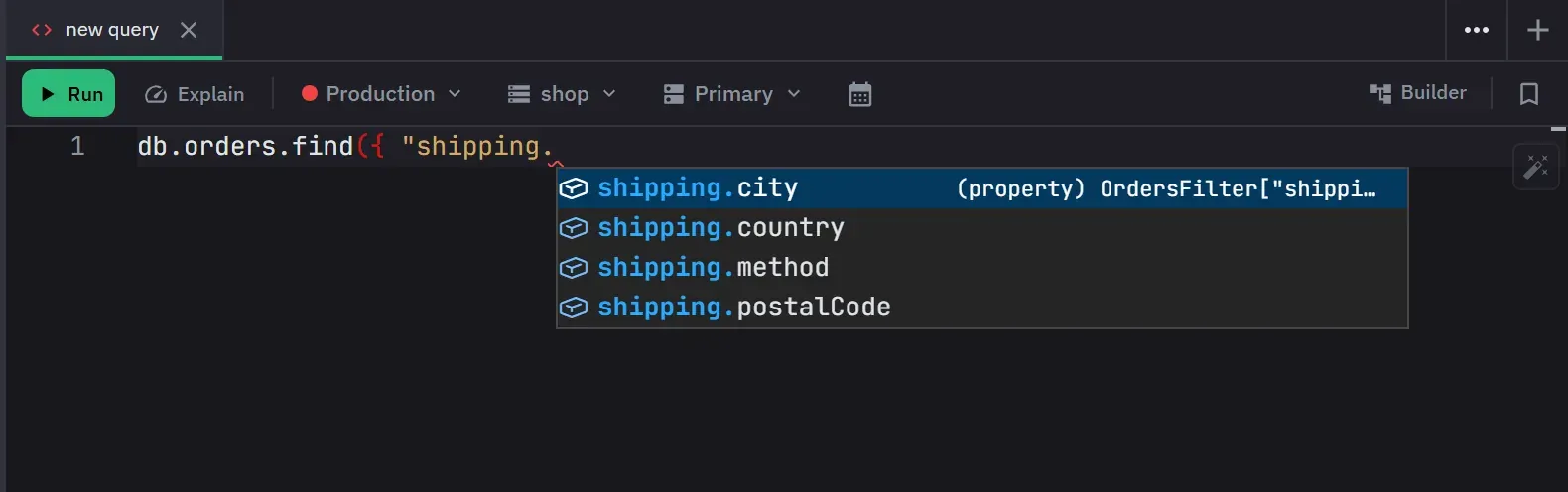
Nested paths, narrowed as you type
Type shipping. and the list holds the fields inside it and nothing else. The values a field holds are offered the same way, so a status is picked rather than spelled.
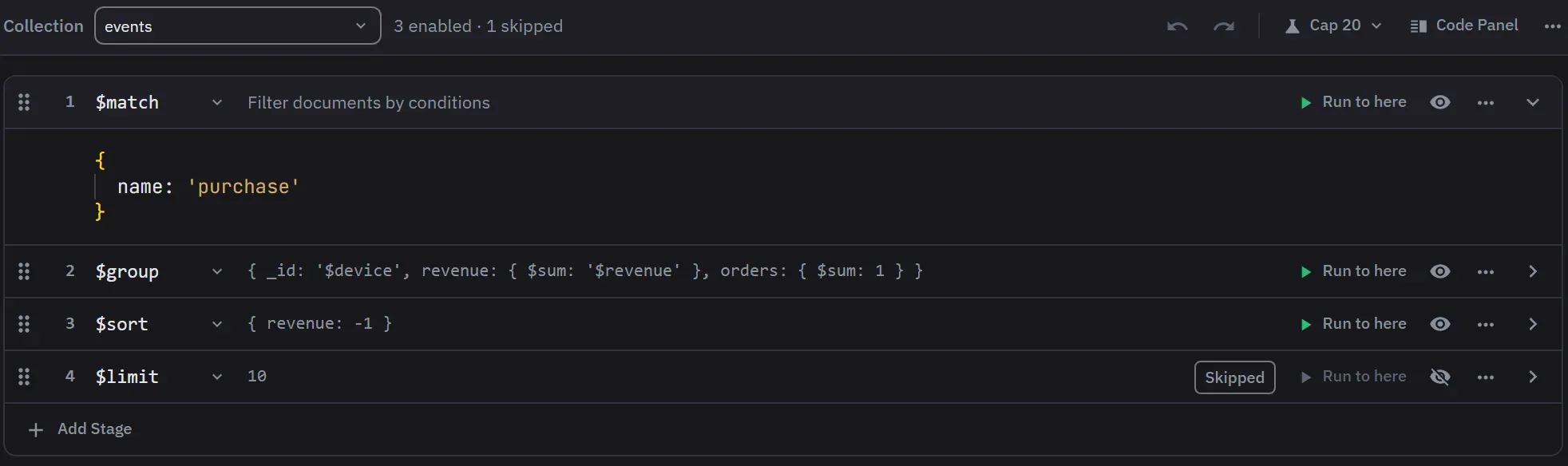
Build it one stage at a time
The aggregation builder shows each stage as a row with its own Run to here, so you see what a stage returns before you write the next one. The builder and the code round-trip any pipeline the builder can read.
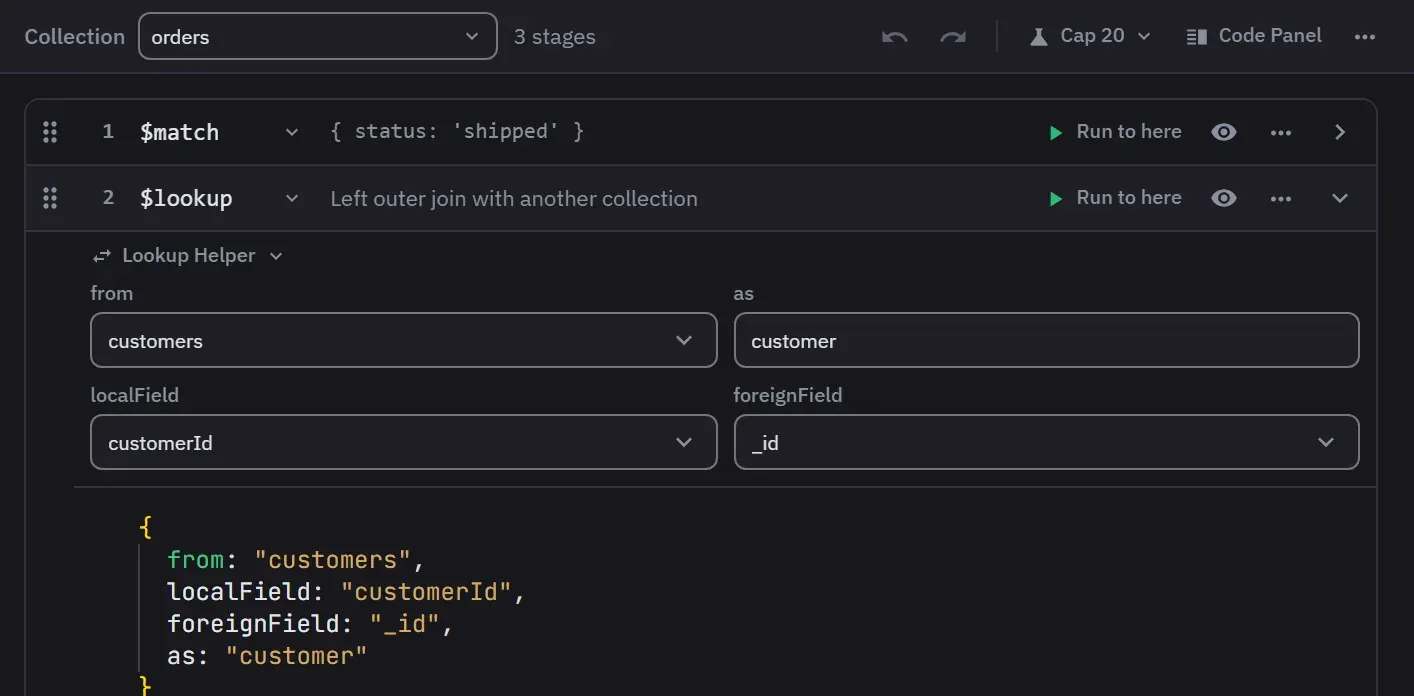
Joins without the syntax
On a $lookup stage, a helper form names the collection, the local field, the foreign field and the output, and keeps them in step with the stage code.
Also in this part
- Where suggestions come from
- Field paths, types, operators, stages, accumulators and enum values, taken from the collections you are connected to.
- Stages that reshape
-
$project,$group,$count,$facet,$bucketand$unsetreplace the fields a later stage is offered.$addFields,$setand$lookupadd to them. - Joined collections
-
$lookupbrings in the foreign collection’s fields, nested paths included. - The editor
- Monaco over the MongoDB Node driver, with a JavaScript sandbox that has BSON constructors, fetch, crypto, Faker, Luxon, Day.js, Lodash and Zod.
Try it against your own data
38 MB installer. Free forever, and a 14-day Pro trial with no card.